
- January 26, 2026
- Posted by: Mrinmoy Ghosh
- Category: Tips
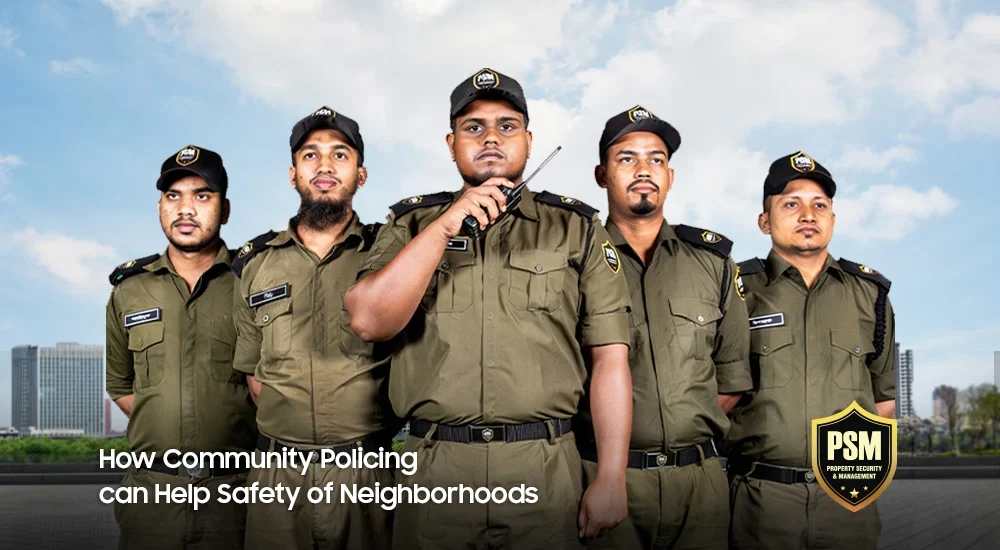
Safety is not created by force alone; it is built through trust, collaboration, and shared responsibility. Modern urban and residential environments require more than reactive law enforcement; they demand proactive engagement between citizens and authorities. This is where community policing plays a critical role. By fostering partnerships between the community police and residents, neighborhoods transform into safer, more resilient, and more socially connected spaces.
Community policing is not just a strategy; it is a philosophy of policing that places people at the center of public safety.
Understanding Community Policing
Community policing is a collaborative approach to law enforcement that emphasizes building relationships between police officers and community members. Instead of operating as a distant authority figure, the community police become visible, accessible, and integrated into daily neighborhood life.
This model focuses on three core pillars:
- Community partnerships
- Organizational transformation
- Problem-solving strategies
Rather than responding only after crimes occur, community policing focuses on identifying root causes of crime and social disorder, preventing risks, and creating long-term solutions through shared action.
Building Trust Between Police and Citizens
Trust is the foundation of neighborhood safety. When residents trust the community police, they are more likely to:
- Share information
- Report suspicious activities
- Cooperate during investigations
- Participate in safety programs
Community Policing humanizes law enforcement. Officers are no longer perceived as outsiders; they become familiar faces in the neighborhood. This relational presence reduces fear, increases transparency, and builds psychological safety within communities.
Trust-driven environments are inherently safer because communication flows freely, and problems are addressed early, before they escalate into serious incidents.
Crime Prevention Through Community Engagement
One of the strongest benefits of community policing is crime prevention. Traditional policing often focuses on response; community policing focuses on prevention.
By actively engaging with residents, schools, local businesses, and community leaders, the Community Police can:
- Identify high-risk areas
- Understand social vulnerabilities
- Monitor recurring patterns of disorder
- Address environmental risks
This proactive model allows neighborhoods to solve problems collaboratively—such as poor lighting, abandoned spaces, unsafe walkways, or youth vulnerability—before they become crime catalysts.
Prevention reduces not only crime rates but also fear, anxiety, and social tension.
Strengthening Social Cohesion in Neighborhoods
Safe neighborhoods are connected neighborhoods. Community policing strengthens social bonds by encouraging collective responsibility for safety.
Residents begin to see safety not as the police’s job alone, but as a shared mission. Neighborhood watch groups, local safety committees, youth engagement programs, and community forums become extensions of this model.
As relationships grow stronger:
- People look out for one another
- Suspicious activities are noticed faster
- Social isolation decreases
- Community resilience increases
This sense of belonging and accountability directly contributes to safer living environments.
Enhancing Response Efficiency and Effectiveness
When community police officers understand local dynamics, response becomes smarter and faster. Familiarity with:
- Local residents
- Cultural contexts
- Community routines
- Neighborhood layouts
allows officers to act with precision rather than assumption. This reduces miscommunication, improves crisis management, and increases the effectiveness of interventions. Community policing transforms law enforcement from reactive enforcement to informed protection.
Empowering Youth and Preventing Future Crime
Youth engagement is a strategic pillar of community policing. Programs that involve young people in community activities, sports, education, mentorship, and leadership development reduce vulnerability to crime and antisocial behavior.
By building positive relationships between youth and the community police, future generations grow up seeing law enforcement as allies, not adversaries. This long-term investment creates sustainable safety and generational trust.
Key Benefits of Community Policing
The benefits of community policing extend beyond crime control and into overall community well-being:
- Improved public trust in law enforcement
- Reduced crime and disorder
- Faster information sharing
- Stronger community relationships
- Greater social responsibility
- Enhanced neighborhood resilience
- Better quality of life
- Long-term safety sustainability
Safety becomes embedded into the social structure of the community, not dependent on enforcement alone.
Community Policing in Urban and Residential Settings
In high-density urban environments and residential developments, community policing is especially effective. Gated communities, mixed-use developments, and planned neighborhoods benefit from structured collaboration between residents and Community Police units.
This approach supports:
- Controlled access management
- Community surveillance awareness
- Emergency preparedness
- Safety education programs
- Public space security
Modern neighborhoods require integrated safety systems, and community policing provides the human framework that connects infrastructure with people.
A Long-Term Vision for Safer Neighborhoods
Community policing is not a short-term intervention; it is a long-term safety architecture. It builds systems of trust, communication, accountability, and cooperation that grow stronger over time.
True neighborhood safety is not achieved by authority alone; it is achieved by partnership.
When residents and community police work together, safety becomes proactive, not reactive. Fear is replaced with confidence. Isolation is replaced with unity. Vulnerability is replaced with resilience.
Conclusion
Community policing is one of the most effective models for creating safe, stable, and thriving neighborhoods. By strengthening relationships between the community police and residents, it transforms public safety into a shared responsibility.
The true benefits of community policing lie not only in reduced crime statistics but also in stronger communities, deeper trust, and sustainable safety ecosystems.
Neighborhoods that embrace community policing do more than protect themselves; they build environments where people feel secure, connected, and empowered to thrive.
Safety, in its truest form, is not enforced; it is co-created.